
Biosolids
ACS have provided over 10 years of reliable waste removal for Southern Water from their sites across the south of England ensuring waste bays are being cleared 52 weeks a year.
We have a dedicated team of area managers covering Kent, Sussex, Hampshire and The Isle of Wight ensuring that all waste is recycled for agricultural use. Our area managers liaise with the farmers/ agronomists to find suitable land bank, prepare and plan risk assessments for the areas agreed to be supplied by biosolids, arrange soil sampling of these areas and coordinate the delivery, stockpiling and spreading of the product.
Our Biosolids service is fully accredited under the biosolids assurance scheme (BAS). This ensures compliance with regulatory requirements and best practice guidance.
You can view our BAS certificate here.
Biosolids service
- Soil sampling: PTEs, pH and phosphate – completed by ACS Farm Image
- Detailed stockpile and field risk assessments carried out by experienced advisors
- Delivery and stockpiling of biosolids
- Spreading of biosolids
Product Analysis
A typical biosolid digested cake product (25% dry matter) applied at a rate of 20t/ha can provide the following nutrients:
| Nutrient | Nutrient Content (kg/t) | Applied total nutrient (kg/ha) | Potential availability year 1 (%) | Available nutrient year 1 (kg/ha) |
|---|---|---|---|---|
| Total Nitrogen (N) | 11 | 220 | 15 | 33 |
| Total Phosphate (P2O5) | 11 | 220 | 50 | 110 |
| Total Potash (K2O) | 0.6 | 12 | 90 | 11 |
| Total Sulphur (SO3) | 8.2 | 164 | 10-20 | 16-33 |
| Total Magnesium (MgO) | 1.6 | 32 | - | - |
Agricultural benefits of biosolids
Biosolid products contain good quantities of most major plant nutrients and organic matter. They also contain valuable amounts of micronutrients. Recycling biosolids for agriculture is a sustainable way of reducing the usage of manufactured fertiliser products.
- Organic matter- Biosolids contain a large amount of organic matter, which is vital for good quality soils by means of improving soil structure, drainage, water retention, soil biology and reducing soil erosion. Repeat applications of biosolids can help to maintain a good level of organic matter in the soil.
- Nitrogen- Depending on the type of crop and time of year it is applied, biosolids can supply around 10-15% of the required nitrogen. The nitrogen supplied is mostly in the organic form, thus releases slowly and is present over the crops entire growth cycle.
- Phosphate- A typical biosolids application will replace crop offtake and help maintain or build up soil phosphate to target indices, enabling optimal crop yields.
- Sulphur- Used at Standard application rates, biosolids contain enough sulphur to meet the typical requirements of cereal and oilseed rape crops.
- Magnesium- Biosolids contain good amounts of magnesium, which can help provide a maintenance dressing for soil and prevent any deficiencies.
- Micronutrients- Biosolids contain a range of micronutrients such as boron, copper, iron, sodium, manganese, aluminium and molybdenum. Micronutrients are usually required in small amounts, depending on crop and soil type.
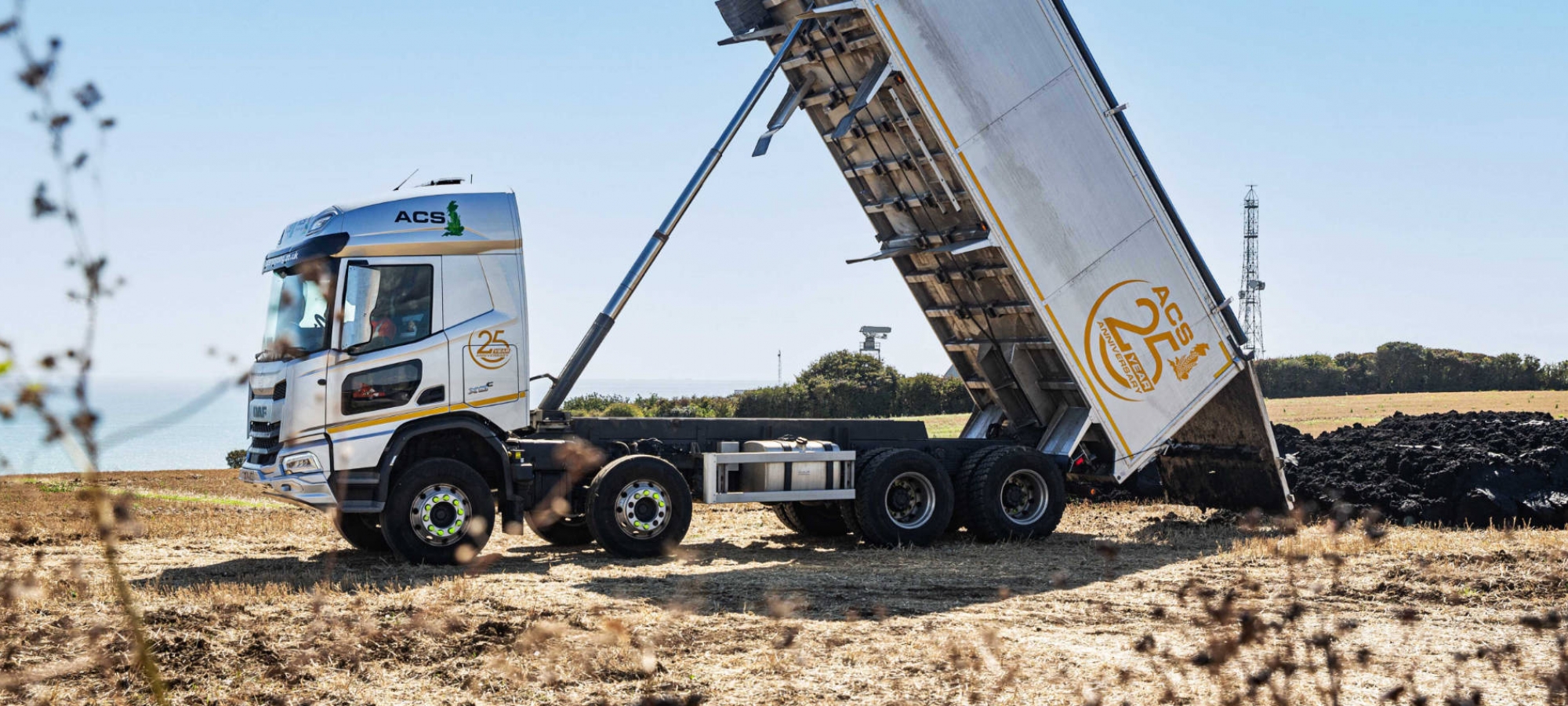
ACS have a FORS Bronze accredited transport department including a fleet of rigid bulk tipper lorries with weigh cells for an accurate and controlled supply, delivery and spread of digested cake to your farm.
Our excavators, telehandlers and loading shovels are operated by skilled professionals and fitted with specialist buckets and weighing equipment. ACS spreading technology encompasses the covered horizontal rotor conditioners and the spinning disc applicators with weigh cell and computer controlled technology to offer the most up to date and innovative spreading equipment with full guidance to ensure perfection.


